Freedom for Sale: How the Cash Bail System Turns Poverty Into a Pretrial Sentence
In America's courtrooms, the price of freedom before trial has little to do with guilt or innocence and everything to do with the balance in your bank account. The cash bail system functions not as a neutral mechanism for ensuring court appearances, but as a class-sorting apparatus that punishes the poor for their poverty while allowing the wealthy to walk free on identical charges. Understanding how this machinery operates — and how communities are dismantling it — is essential to any serious reckoning with equality before the law.
A System Built on a Legal Fiction
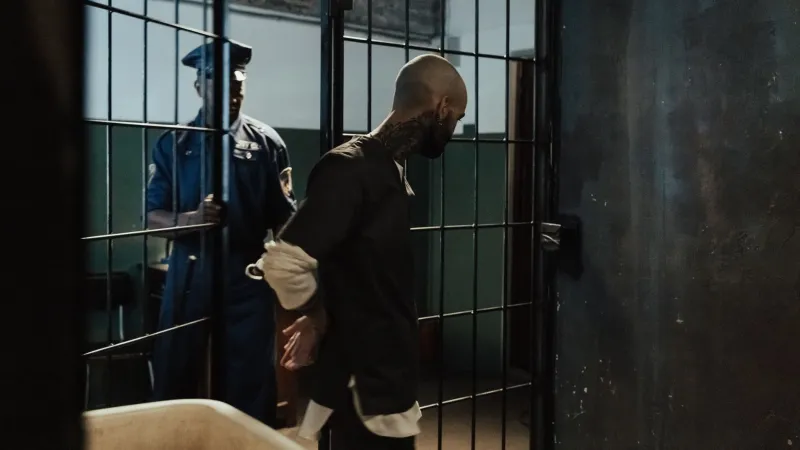
The foundational promise of American criminal justice is that a person is innocent until proven guilty. Cash bail, as currently practiced, renders that promise hollow. When a judge sets bail at $10,000 for a defendant charged with a nonviolent offense, the practical outcome diverges sharply based on economic class. A person of means posts bail, returns home to their family, retains their employment, and prepares their defense from a position of relative stability. A person without means sits in a county jail — sometimes for months, occasionally for years — awaiting a trial date that may never arrive.
They are not imprisoned because a court found them dangerous. They are imprisoned because they are poor. That distinction, unremarkable to those who administer the system daily, represents a fundamental corruption of the principle that justice should be blind to wealth.
The numbers bear this out with uncomfortable clarity. On any given day, approximately 450,000 people in the United States are detained pretrial — held not because they have been convicted of anything, but because they cannot afford the price of their own release. A significant portion of these individuals are detained on bail amounts under $5,000. For a family living paycheck to paycheck, even that modest sum is insurmountable.
The Bail Bond Industry: Profiting from Captivity
Into this gap steps an industry that has built an extraordinarily profitable enterprise on the vulnerability of the accused. Bail bond companies, operating in most U.S. states, charge defendants a nonrefundable premium — typically ten percent of the total bail amount — in exchange for posting the full bond with the court. If a defendant cannot pay a $10,000 bail, they may purchase their freedom for $1,000, a sum they will never recover regardless of the outcome of their case.
For the industry, this is a nearly risk-free model underwritten by desperation. The bail bond sector generates an estimated $2 billion annually, a revenue stream that depends entirely on courts continuing to set unaffordable bail amounts and on defendants lacking alternatives. The industry has responded accordingly, deploying substantial lobbying resources in state legislatures to oppose reform efforts, contributing to the campaigns of prosecutors and judges who favor high bail schedules, and framing their product as a public safety necessity rather than what it actually is: a private tax on poverty.
This is regulatory capture operating in one of its most consequential arenas. The entities most financially invested in maintaining an unjust system have positioned themselves as indispensable partners to the courts that set that system's terms.
The Cascading Consequences of a Single Night in Jail
The harm produced by pretrial detention does not begin and end with confinement. Research consistently documents a cascade of consequences that extend far beyond the jail cell. Defendants held pretrial are significantly more likely to plead guilty — not because they are guilty, but because pleading guilty offers the fastest path to release, and the alternative is continued detention while awaiting a trial. This dynamic produces an assembly line of coerced pleas that permanently mark individuals with criminal records they may not deserve.
Employment collapses rapidly. Even a few days of unexpected absence is sufficient for many low-wage workers to lose their jobs. Housing follows: missed rent payments trigger eviction proceedings. For parents, pretrial detention can initiate child welfare interventions that fracture families and, in some cases, result in the termination of parental rights. The punishment, in other words, is not deferred pending the outcome of the legal process — it begins the moment the cell door closes, and it compounds daily.
Dr. B.R. Ambedkar understood that formal legal equality means nothing when the material conditions of people's lives determine whether they can actually access the rights the law nominally guarantees. The bail system is a precise illustration of that insight: the Eighth Amendment prohibits excessive bail, but a system that sets bail at amounts categorically unaffordable to the poor effectively nullifies that protection for those who need it most.
The Political Architecture of Resistance
Efforts to reform or eliminate cash bail have encountered fierce opposition from a coalition of interests whose financial and political stakes in the current system are substantial. The bail bond industry is the most visible member of this coalition, but it is not the only one. Prosecutors who rely on pretrial detention as a tool for extracting guilty pleas, sheriffs who receive funding tied to jail populations, and politicians who campaign on incarceration as a proxy for public safety all have institutional incentives to defend a system that demonstrably fails the communities they claim to serve.
New Jersey and Washington, D.C., have demonstrated that eliminating cash bail does not produce the crime wave that opponents predict. New Jersey's 2017 reform dramatically reduced the pretrial jail population while court appearance rates held steady. Illinois enacted a full elimination of cash bail under the SAFE-T Act, effective 2023, making it the first state to abolish the practice entirely. These examples provide both evidence and political precedent for advocates in states where the bail bond lobby remains entrenched.
Community Bail Funds and the Practice of Direct Liberation
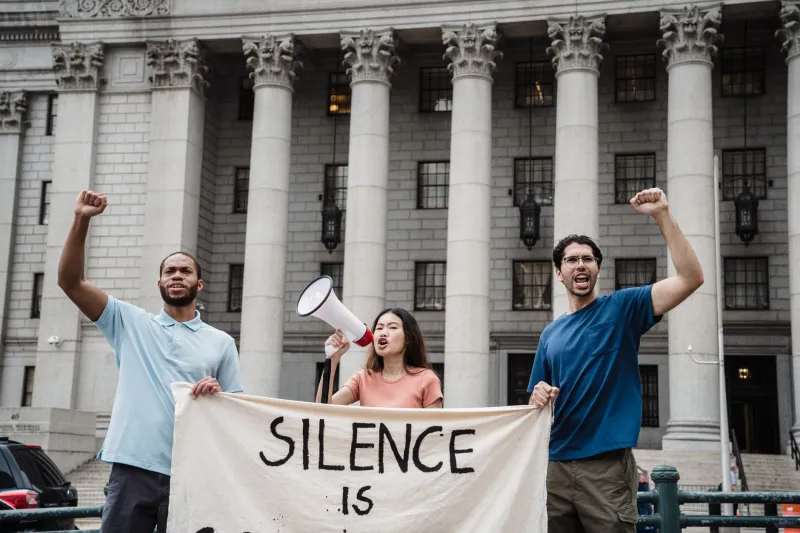
While legislative battles proceed on long timelines against well-funded opposition, communities have developed a more immediate instrument of resistance: the community bail fund. Operating in cities across the country, these organizations pool donated resources to post bail for individuals who cannot afford release, removing people from pretrial detention without requiring them to enrich the bond industry or surrender a nonrefundable premium.
The National Bail Fund Network coordinates more than ninety such funds operating across the United States. Beyond their direct function, community bail funds serve as organizing hubs — connecting newly released individuals with legal support, social services, and civic engagement opportunities, and building the constituency of directly affected people whose testimony carries moral authority in legislative and judicial reform campaigns.
This is organizing in the tradition Dr. Ambedkar would have recognized: meeting immediate material need while simultaneously constructing the political power necessary to address root causes. A community that has secured someone's release from an unjust detention has also created a relationship, and relationships are the raw material of durable movements.
Justice Cannot Be Means-Tested
The cash bail system is not a peripheral anomaly in an otherwise fair legal order. It is a structural feature of a criminal justice apparatus that was built, maintained, and repeatedly defended in ways that systematically disadvantage the poor, disproportionately burden Black and brown communities, and enrich private interests at public expense. Reforming it requires the same combination of direct action, legislative pressure, legal advocacy, and community organizing that every serious advance toward equality has demanded.
Freedom before trial should not be a commodity available only to those who can afford it. Until it is not, every person held in a county jail on unaffordable bail is a living indictment of a system that has chosen profit and convenience over the principles it claims to uphold. The work of changing that system belongs to all of us — and it is already underway.