The Ballot Is a Floor, Not a Ceiling: Reclaiming Economic Power as the Engine of Justice
Winning Elections, Losing Ground
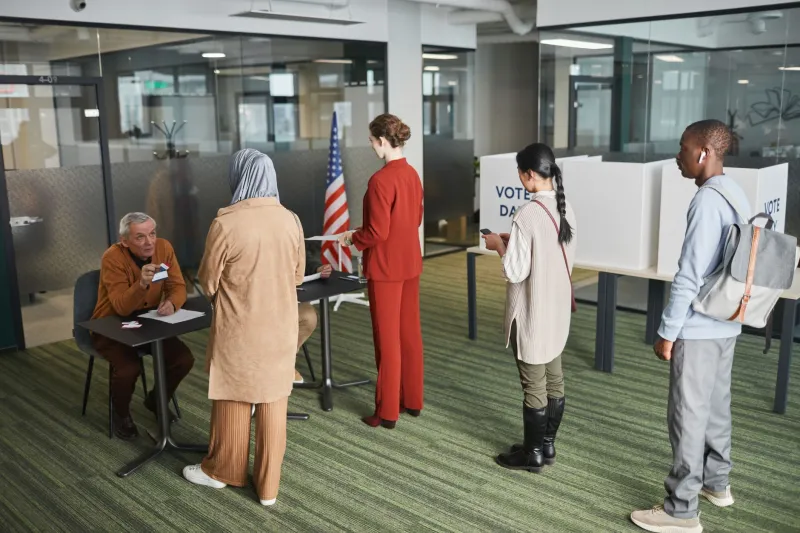
In November 2008, Black voter turnout reached its highest recorded level in American history. The candidate those voters supported won decisively. Two years later, the foreclosure crisis — which had been quietly transferring the accumulated wealth of Black and Latino homeowners to financial institutions for the better part of a decade — was still accelerating. By 2011, the median wealth of Black households had fallen to $6,446, compared to $110,729 for white households. The electoral victory was real. The economic catastrophe was equally real, and the ballot had not stopped it.
This is not an argument against voting. Voting matters enormously — for the composition of courts, for the protection of bodily autonomy, for the difference between an administration that enforces civil rights law and one that dismantles it. But it is an argument against the particular form of electoral fetishism that has come to dominate progressive strategy in recent decades: the belief that if we simply register enough voters and elect the right candidates, systemic change will follow as a matter of course.
Dr. B. R. Ambedkar, who spent his career thinking rigorously about the relationship between formal political rights and substantive equality, was characteristically precise on this point. Political democracy, he argued, cannot survive without social and economic democracy as its foundation. A community that controls its votes but not its labor, not its land, and not its access to capital is a community that will find its political victories perpetually vulnerable to economic reversal.
What Economic Power Actually Looks Like
The organized labor movement at its mid-twentieth-century peak offers the clearest American example of what it looks like when working people hold genuine economic leverage — and what becomes possible when they do.
The Civil Rights Act of 1964 and the Voting Rights Act of 1965 are rightfully celebrated as legislative landmarks. Less often acknowledged is the degree to which their passage was enabled by the economic disruption capacity of organized Black communities. The Montgomery Bus Boycott was not primarily a voting rights action; it was an economic action. For 381 days, Black residents of Montgomery, Alabama, withdrew their labor as consumers from a transit system that depended on their patronage. The city's bus company faced insolvency. The economic pressure created the conditions under which legal victory became achievable.
Similarly, the union organizing drives of the 1930s and 1940s did not simply improve wages for their members. They built institutional infrastructure — union halls, strike funds, political education programs, legal defense networks — that gave working-class communities a durable organizational capacity that outlasted any individual electoral cycle. The labor movement at its strongest was not a voting bloc. It was a counter-institution capable of exercising power through multiple channels simultaneously.
The Long Retreat and Its Costs
Something significant changed in the 1970s and accelerated through the 1980s. The deliberate dismantling of labor power — through the deregulation of financial markets, the aggressive use of union-busting consultants, the offshoring of manufacturing, and the Reagan administration's signal moment in firing the air traffic controllers — did not happen in a political vacuum. It was a strategic project undertaken by organized capital, and it succeeded in large part because the American left had not built economic institutions capable of withstanding sustained assault.
By the time the progressive coalition reconstituted itself around electoral politics in the 1990s, it had largely abandoned the economic organizing tradition that had given it structural power. The model that emerged prioritized voter registration, candidate recruitment, and legislative lobbying — all of which are legitimate and necessary activities, but none of which generate the kind of independent economic leverage that makes organized communities genuinely difficult to ignore.
The consequences have been visible in the decades since. Minimum wage increases passed by ballot initiative have been preempted by state legislatures. Environmental regulations enacted under one administration have been reversed by the next. Healthcare reform that was the product of years of electoral organizing was immediately subjected to a decade of judicial and legislative attack. Without economic power to defend political gains, those gains remain perpetually provisional.
Cooperative Ownership and Community Wealth Building
The most promising counter-model currently developing in the United States does not originate in Washington. It originates in places like Cleveland, Ohio, where the Evergreen Cooperatives — worker-owned businesses anchored by contracts with large local institutions like hospitals and universities — have created a model of community wealth-building that does not depend on the electoral calendar.
The logic is straightforward: when workers own the enterprises in which they labor, the surplus those enterprises generate stays in the community rather than flowing to distant shareholders. When community land trusts hold residential real estate, the equity that accumulates belongs to residents rather than to speculative investors. When credit unions and community development financial institutions provide capital to small businesses in underserved neighborhoods, the interest payments that would otherwise leave the community are recycled within it.
None of these mechanisms replace electoral politics. They complement and reinforce it. A community with a strong cooperative sector, a functioning credit union, and organized workers is a community that can sustain a prolonged campaign, weather a hostile administration, and hold elected officials accountable between election cycles rather than only during them.
What Must Change
The American left faces a strategic choice that cannot be deferred much longer. The electoral infrastructure built over the past twenty years is real and valuable, but it is insufficient on its own. Building economic power alongside political power requires a willingness to invest in slower, less visible work: the years it takes to develop a worker cooperative from concept to viability, the patient organizing required to build a genuine union in a sector that has never had one, the sustained community engagement necessary to establish a land trust.
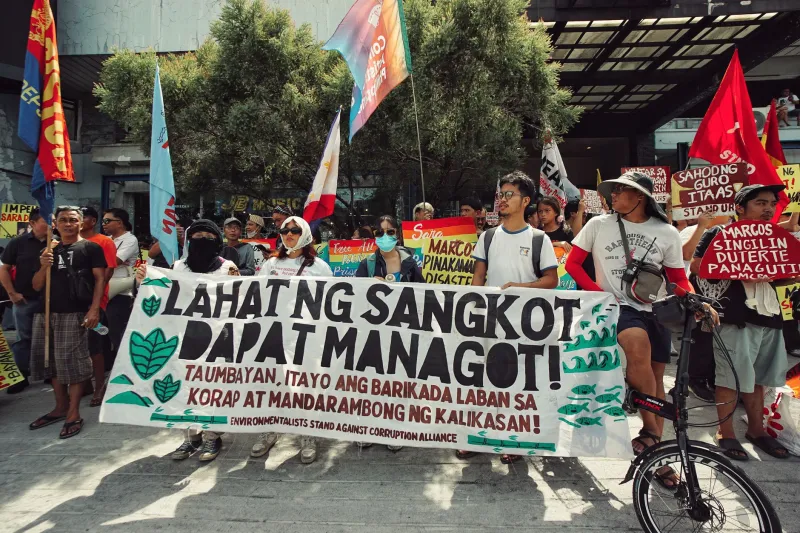
Dr. Ambedkar's vision of social democracy was never reducible to the franchise. It encompassed the full range of conditions — economic, social, and political — without which formal rights remain hollow. The ballot box is where power is periodically ratified. The workplace, the neighborhood, and the cooperative are where it is built and sustained between ratifications.
Justice is not an election result. It is a condition that organized communities create and defend through every available instrument of collective power — and the work of building those instruments is the work that cannot wait.