Debt, Credentials, and the Wage Floor: How Modern America Engineers Hereditary Disadvantage

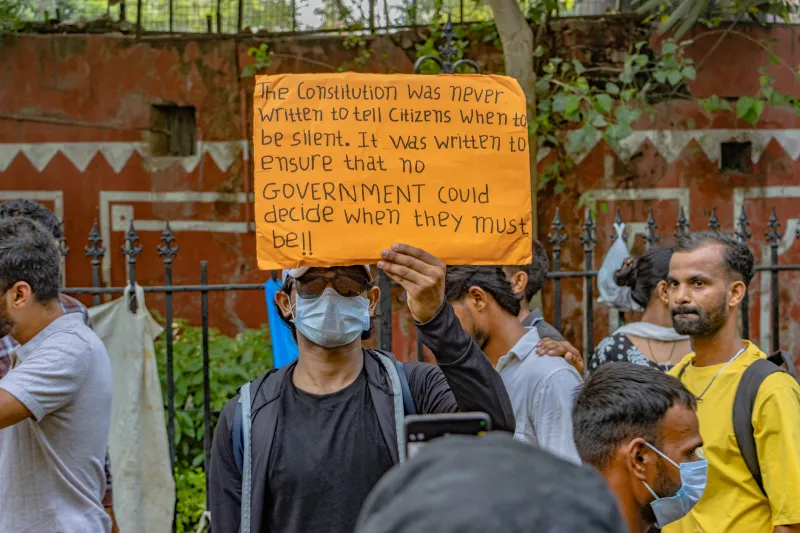
Photo: diverse community members organizing meeting economic justice workshop, via c8.alamy.com
A System With No Accidents
Let us dispense, at the outset, with a comforting myth: that economic inequality in America is the result of individual choices, poor planning, or cultural deficiencies among those at the bottom. This myth is industriously maintained because it is extraordinarily useful — to creditors, to employers, to the political class that services them. It transforms a structural problem into a moral failing, and in doing so, it insulates the architects of that structure from accountability.
The truth is considerably less flattering to the powerful. The economic mechanisms that trap millions of Americans in multigenerational poverty — predatory lending, systematic wage theft, credential gatekeeping, and labor exploitation — do not function like random misfortune. They function like a system. They are predictable, they are profitable, and they fall with disproportionate weight on the same communities generation after generation. That is not a coincidence. That is design.
Dr. B.R. Ambedkar spent his life analyzing a system — caste — that assigned human beings to fixed positions in a hierarchy based not on merit or choice but on birth, and then constructed elaborate social, legal, and religious mechanisms to keep them there. He recognized that caste was not primarily about prejudice in the hearts of individuals. It was about the material organization of society — who controlled land, credit, labor, and knowledge — and the ideological scaffolding built to justify that control.
Look at America's economic landscape through that lens, and the parallels become difficult to dismiss.
The Predatory Lending Corridor
In cities across the United States, there exist what researchers have termed "banking deserts" — neighborhoods, predominantly Black and Latino, where mainstream financial institutions have systematically disinvested. In their place stand payday lenders, check-cashing outlets, and rent-to-own retailers, each offering services at rates that would be unthinkable in wealthier zip codes.
The payday loan industry, which generates over $9 billion in annual revenue, operates on a straightforward logic: lend small amounts to people in financial distress at annualized interest rates that can exceed 400 percent, structured to ensure that the principal is rarely fully retired. The borrower who takes out a $300 loan to cover a car repair may repay $600 over the following months and still owe money. The industry is not predatory by accident or poor regulation. It is predatory by design, and it has invested heavily in the political relationships necessary to preserve that design.
The consequences extend across generations. Families that cannot build savings cannot absorb shocks. Families that cannot absorb shocks accumulate debt. Families that accumulate debt cannot invest in education, housing, or business formation. The wealth gap compounds annually, and the children of those families begin their adult lives at a structural disadvantage that no amount of personal industry fully overcomes. This is hereditary disadvantage — not inscribed in blood, but enforced through credit markets that are every bit as effective.
Wage Theft: The Crime No One Prosecutes
The Economic Policy Institute estimates that wage theft — the failure of employers to pay workers what they are legally owed, through unpaid overtime, minimum wage violations, illegal deductions, and off-the-clock work — costs American workers more than $50 billion annually. To put that in perspective: the total value of all robberies, burglaries, larcenies, and motor vehicle thefts reported to the FBI in recent years is a fraction of that figure.
Yet wage theft is prosecuted with a fraction of the urgency applied to street crime. Enforcement agencies are underfunded. Penalties are often insufficient to deter violations. Workers in the industries most affected — agriculture, domestic service, restaurant work, construction — face retaliation, immigration consequences, or simply the practical impossibility of pursuing a claim while working multiple jobs to survive.
Wage theft is not randomly distributed. It concentrates in industries where workers have the least power — where they are geographically isolated, linguistically marginalized, legally vulnerable, or simply too economically precarious to risk the income loss that comes with a complaint. The employer who steals wages from a workforce of undocumented kitchen workers is not exploiting a loophole. They are exploiting a hierarchy — one that assigns some workers' time a negotiable value and others' an enforceable one.
The Credential Moat
Americans are told, consistently and sincerely, that education is the great equalizer — the mechanism by which talent and effort can overcome the disadvantage of birth. There is something to this. There is also something profoundly misleading about it.
The credential economy does not simply reward knowledge. It rewards access to the institutions that confer credentials, and access to those institutions is itself stratified by wealth, geography, and social capital in ways that reproduce existing hierarchies with remarkable fidelity. The child of professional-class parents arrives at college applications having attended well-resourced schools, accumulated extracurricular achievements that require both time and money, and navigated a process that their social networks have demystified over years. The child of a service worker navigates the same process with fewer resources, more debt, and often the burden of supporting family members financially.
When both children graduate — if both children graduate — the credential may be formally equivalent. But the network, the internship, the graduate school recommendation, the family safety net that allows one to accept an unpaid position while building a resume: these are not formally credentialed, and they are not equally distributed. The credential moat is real. It is one of the primary mechanisms by which professional-class status replicates itself across generations, and it is maintained by institutions — elite universities, licensing boards, professional associations — that have powerful interests in restricting entry.
Who Benefits, and How They Maintain It
Caste systems persist not because of inertia alone, but because they deliver consistent benefits to those positioned at the top. America's economic hierarchy is no different. Predatory lending is profitable. Wage theft improves margins. Credential gatekeeping limits competition and maintains salary premiums. Labor exploitation in agriculture and food processing keeps prices low for consumers who are insulated from the human cost.
The beneficiaries of these systems are not monolithic, and many of them are not consciously malicious. But they are organized — through trade associations, lobbying operations, campaign contributions, and the revolving door between regulatory agencies and the industries they oversee. The political infrastructure that maintains the enforcement gap, that defunds labor inspection, that preserves the payday lending model, is not passive. It is actively tended.
Frameworks for Dismantling the Hierarchy
Organizations working on the ground in affected communities have developed several strategies that, taken together, constitute a coherent framework for challenging economic caste.
Build worker power at the base. The Fight for $15 movement demonstrated that wage floors can be raised through sustained organizing, even in the absence of federal action. Worker centers, which organize workers outside traditional union structures, have won wage theft recoveries, improved safety conditions, and changed employer behavior in industries long considered unorganizable.
Disrupt the predatory lending pipeline. Community development financial institutions (CDFIs) and credit unions operating in underserved markets offer an alternative infrastructure — one that provides credit without extractive terms. Supporting, expanding, and advocating for these institutions is a concrete intervention in the geography of financial exclusion.
Democratize credential pathways. Advocacy for debt-free public higher education, expanded apprenticeship programs, and the elimination of unnecessary licensing requirements that function primarily as barriers to entry can open professional pathways that currently require either inherited wealth or decades of debt servitude.
Connect the local to the structural. The tenant facing eviction, the worker whose wages were stolen, the student drowning in debt — these are not separate problems requiring separate solutions. They are manifestations of the same underlying logic. Movements that build solidarity across these experiences, that recognize the common architecture of exclusion, develop the kind of durable power that can challenge that architecture at its foundations.
Dr. Ambedkar did not merely diagnose caste. He organized against it, built institutions to circumvent it, and demanded that the state be held accountable for dismantling it. The work in America demands no less — a clear-eyed analysis of who benefits from the hierarchy, combined with the organized community power to make maintaining it politically and economically costly.
The hierarchy is not inevitable. It is a choice — made by some, imposed on others, and reversible when enough people refuse to accept it as natural.