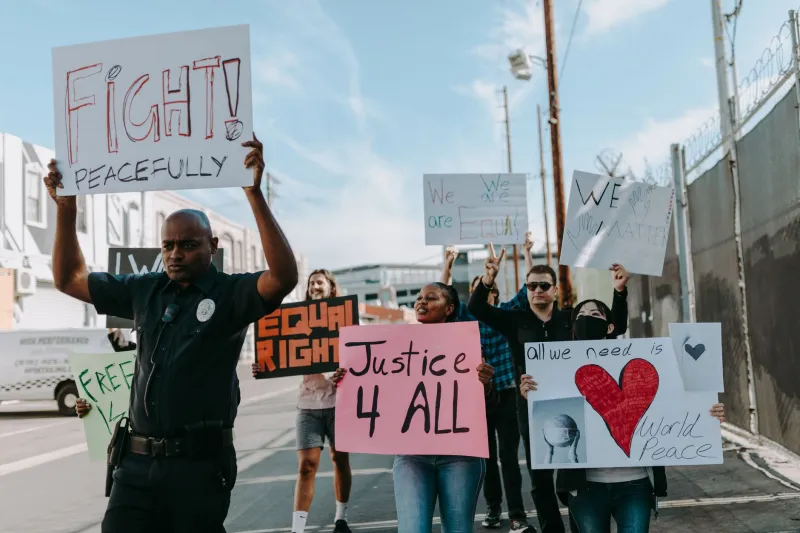
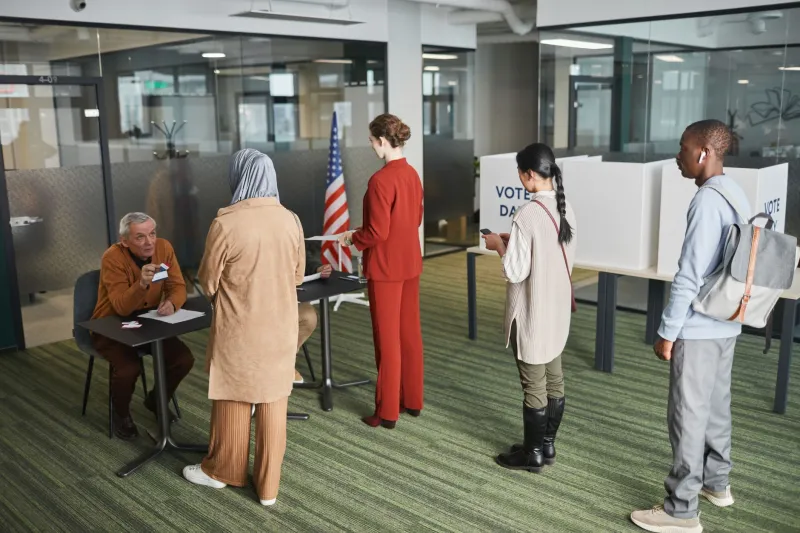
Rights on Paper, Power in Practice: Why Constitutional Guarantees Mean Nothing Without Organized Communities
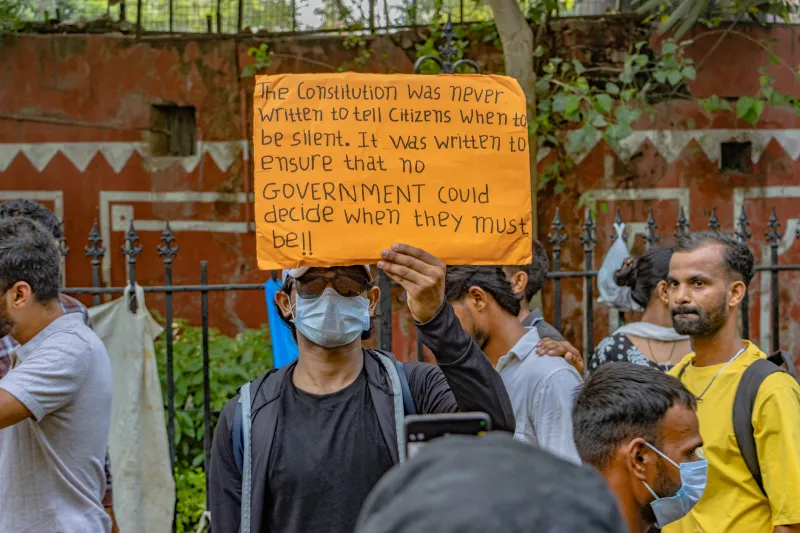
When the Law Speaks and No One Listens
The United States Constitution is, by most measures, one of the most admired governing documents in the world. Its amendments promise due process, equal protection, and freedom from cruel and unusual punishment. Federal statutes layer additional protections on top: the Civil Rights Act, the Fair Housing Act, the Americans with Disabilities Act. On paper, the architecture of equality appears formidable.
And yet, for millions of Americans — undocumented farmworkers in the Central Valley, incarcerated people in private detention facilities, residents of environmental sacrifice zones in Louisiana's Cancer Alley — those protections function less like shields and more like decorations. They exist. They simply do not protect.
This gap between legal promise and lived reality is not a flaw in the system's design so much as a feature of how power operates. Dr. B.R. Ambedkar understood this with extraordinary clarity. As the principal architect of the Indian Constitution, he poured decades of intellectual labor into drafting the most progressive foundational document his nation had ever seen. Yet he warned, repeatedly and urgently, that constitutional morality could not be assumed. It had to be cultivated — through organized civic engagement, through the relentless pressure of communities who refused to accept the distance between what the law said and what the law did.
That warning belongs as much to America today as it did to India in 1949.
The Enforcement Gap Is Not an Accident
Legal scholars sometimes call it the "implementation deficit" — the structural chasm between the enactment of rights and their actual exercise. But describing it in bureaucratic language risks obscuring its human cost and its political origins.
Consider the rights of incarcerated workers. The Thirteenth Amendment abolished slavery "except as a punishment for crime," a carve-out that has allowed prison labor to persist as a legally sanctioned institution. Incarcerated people in many states are compelled to work for wages ranging from nothing to a few cents per hour, with no recourse to labor organizing protections or minimum wage laws. When advocates began challenging this system in the courts, they discovered that the legal framework itself had been designed to exclude this population from standard protections. The rights were never extended in the first place — but the rhetoric of American freedom had obscured that absence for generations.
Or consider immigrant workers — particularly those in agriculture, domestic service, and meat processing. Many hold legal status; many do not. But regardless of their documentation, they are entitled under federal law to basic workplace protections: the right to a safe environment, the right to be paid what they are owed, the right to organize. In practice, the threat of deportation, language barriers, geographic isolation, and employer retaliation conspire to make those rights functionally unreachable. The law exists. The power to access it does not.
This is not coincidence. Enforcement mechanisms are funded or defunded through political processes controlled largely by the same economic interests that benefit from the enforcement gap. When OSHA is understaffed, when the National Labor Relations Board moves at a glacial pace, when legal aid organizations are perpetually underfunded, the result is a legal system that responds promptly to those with resources and delays indefinitely for those without them.
Ambedkar's Lesson: The Constitution Is a Tool, Not a Guarantee
Dr. Ambedkar's most penetrating insight was not about any specific right. It was about the relationship between formal law and social power. He argued that legal equality imposed from above, without a corresponding shift in the social and economic conditions that produce inequality, would remain an abstraction. "However good a Constitution may be," he observed, "it is sure to turn out bad because those who are called to work it, happen to be a bad lot."
The inverse is equally true: communities that organize, that build institutional capacity, that develop the political muscle to demand accountability — those communities can make even imperfect laws work in their favor. The Constitution becomes a lever, but only when someone is willing to apply sustained force.
American history offers no shortage of examples. The formal legal rights of Black Americans were codified in the Reconstruction Amendments in the 1860s and then systematically nullified through terror, disenfranchisement, and judicial hostility for nearly a century. It was not a subsequent constitutional amendment that began to reverse this. It was the organized power of the Civil Rights Movement — boycotts, sit-ins, voter registration drives, legal strategies coordinated with mass action — that forced the political system to begin honoring commitments it had long ignored.
Case Studies in Reclamation
The pattern repeats across contexts and eras. In the early 2000s, domestic workers across the country technically had no enforceable labor rights under federal law — they had been deliberately excluded from the National Labor Relations Act in 1935, a compromise with Southern legislators who wished to maintain control over a workforce that was disproportionately Black and female. For decades, that exclusion stood.
Then the National Domestic Workers Alliance organized. Over years of sustained campaign work — storytelling, coalition-building, legislative lobbying, and direct action — they won passage of the New York Domestic Workers Bill of Rights in 2010, the first state-level legislation of its kind in the country. California, Illinois, and several other states followed. The law did not change because it was unjust, though it was. It changed because workers organized with sufficient power to compel the political system to respond.
A similar dynamic unfolded in the fight for prison phone rate reform. Incarcerated people and their families had long paid exploitative rates to private telecommunications companies for the ability to maintain contact — rates that could reach several dollars per minute. The legal framework permitted this. It took sustained organizing by families, advocacy organizations, and formerly incarcerated people to pressure the Federal Communications Commission into capping interstate rates, a process that took years of bureaucratic engagement backed by public pressure campaigns.
In neither case did the rights materialize spontaneously. They were built, fought for, and won through organized community power.
The Organizing Imperative
For those committed to the Ambedkarite vision of substantive equality — not merely formal equality, but the genuine capacity of every person to live a dignified life — the lesson is consistent across history: legal rights are the floor, not the ceiling, and they hold only when communities are organized enough to defend and expand them.
This demands several things simultaneously. It demands legal literacy — communities understanding what rights they nominally hold and where the enforcement gaps lie. It demands institutional capacity — organizations that can sustain campaigns over years, not just mobilize for a single moment. And it demands a willingness to connect the local and the structural, to understand that the farmworker denied overtime pay and the incarcerated worker denied minimum wage are not isolated cases but expressions of the same logic: that certain people's rights are negotiable when there is profit to be made from their negotiability.
The Constitution is a remarkable document. But Dr. Ambedkar's most enduring contribution was not the text he wrote — it was the insistence that text alone is never enough. The work of making rights real is the work of organizing. It has always been, and it remains, the only path that has ever delivered.
The struggle for substantive equality does not end at the courthouse door. It begins there — and continues in every neighborhood, workplace, and community meeting where people choose to hold power accountable.