Mouths of Consequence: The Deliberate Abandonment of Dental Care and the Communities It Is Killing
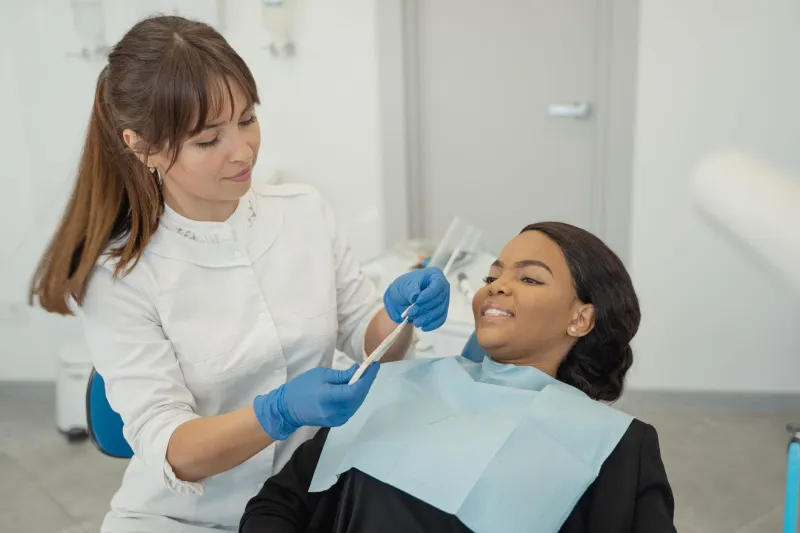
Dental disease does not stay in the mouth. Untreated infections spread to the jaw, the bloodstream, and the heart — and for millions of low-income Americans without dental coverage, the consequences range from chronic pain and lost employment to preventable death. This is not an accident of medical classification. It is the product of deliberate policy choices, sustained lobbying, and a professional guild that has successfully insulated itself from accountability for decades.
The Artificial Divide
When Medicare was established in 1965, dental care was explicitly excluded. The political calculus of the moment demanded compromise, and the American Dental Association — then as now a formidable lobbying force — preferred a system that preserved private practice dominance over one that might subject dentists to public pricing structures. The exclusion was never grounded in medicine. Teeth are part of the body. Oral infections are systemic threats. The separation of dental from medical care is an administrative fiction with lethal consequences.
Nearly six decades later, that fiction endures. Medicare still does not cover routine dental care for most beneficiaries. Medicaid coverage varies wildly by state, with many states offering only emergency extractions for adults — a policy that amounts to waiting until a tooth is beyond saving before the government will pay to remove it. The Affordable Care Act required pediatric dental coverage as an essential benefit, but adults were left largely to the market. Employer-sponsored dental plans, where they exist, typically carry annual caps of $1,000 to $1,500 — figures that have not meaningfully increased in decades despite rising costs, and that evaporate quickly when a single crown or root canal is needed.
The result is a coverage gap that falls with crushing precision on low-income workers, people of color, rural residents, and the elderly. More than 68 million Americans lack any dental coverage whatsoever, according to the American Dental Association's own health policy institute. Among adults living below 200 percent of the federal poverty line, the rate of untreated tooth decay exceeds 30 percent.
Pain as a Disqualifier
The consequences of this abandonment extend well beyond suffering, though suffering alone should be sufficient to demand action. Dental disease functions as an economic disqualifier. Studies have documented that visible tooth decay reduces the likelihood of being called back for a job interview. Workers in customer-facing roles have reported losing positions or being passed over for promotion because of dental appearance — a criterion never stated aloud but operating with consistent effect.
The emergency room data is damning. Approximately two million Americans visit emergency departments annually for dental conditions that primary care or preventive dentistry could have addressed. Emergency rooms are legally obligated to manage pain but are not equipped to perform extractions or restorations. Patients receive antibiotics and painkillers and are discharged with instructions to follow up with a dentist — a follow-up that many cannot afford. They return days or weeks later, the infection worsened, the cost to the system multiplied.
In 2007, twelve-year-old Deamonte Driver of Prince George's County, Maryland, died after a tooth infection spread to his brain. His family's Medicaid had lapsed. Finding a dentist who accepted Medicaid in their area had proven impossible. His death generated a brief national conversation, produced some incremental policy gestures, and was then largely forgotten. The structural conditions that killed him remain substantially intact.
The Lobby That Built the Wall
The American Dental Association has spent decades cultivating the legal and regulatory environment that sustains its members' market position. The ADA has opposed scope-of-practice expansions that would allow dental therapists — mid-level practitioners trained to perform basic procedures at lower cost — to serve communities where dentists are scarce or unaffordable. Minnesota, Alaska, and a handful of other states have authorized dental therapists over the ADA's objections, and early evaluations have shown meaningful improvements in access for underserved populations. The ADA's national lobbying apparatus has worked to prevent this model from spreading.
The guild has similarly resisted community water fluoridation in some jurisdictions, opposed integration of dental care into federally qualified health centers where it might compete with private practice, and lobbied against reimbursement rate increases for Medicaid dental providers while simultaneously arguing that low rates — not the guild's own gate-keeping — explain why so few dentists accept Medicaid patients.
This is regulatory capture executed with precision: shaping the policy environment to protect professional income and market exclusivity while framing opposition to every reform as concern for patient safety.
What Integration Looks Like Elsewhere
The United Kingdom's National Health Service includes dental care as a covered benefit, with subsidized co-pays for most services and full coverage for children and pregnant women. Canada's provinces have moved in recent years toward expanded public dental programs, with the federal government launching a Canadian Dental Care Plan in 2023 that aims to cover uninsured Canadians with household incomes below $90,000. Germany, France, and Scandinavian nations treat dental care as an ordinary component of health coverage rather than a luxury add-on.
None of these systems is without flaws. Wait times, coverage gaps, and reimbursement disputes exist in every publicly administered dental program. But the baseline — that tooth decay should not bankrupt a family or end a career — is established. The debate is about how to improve public systems, not whether the public deserves access at all.
The Organizing Imperative
Community health advocates, labor unions, and social justice organizations have begun to build the political infrastructure needed to challenge dental exclusion at multiple levels. The push to include dental benefits in Medicare — advanced during the 2021 Build Back Better negotiations before being stripped from the final legislation — demonstrated both the growing political viability of the demand and the intensity of industry opposition.
State-level campaigns to expand Medicaid dental coverage for adults have succeeded in several states in recent years. Advocacy for dental therapist authorization has created openings in state legislatures where the ADA's influence is not absolute. Community health centers, when adequately funded, have demonstrated that integrated oral and primary care is both clinically effective and administratively feasible.
The framework of Dr. Ambedkar's vision is clarifying here: access to health care — including the care that happens from the neck up — is not a privilege to be rationed by income. It is a condition of full participation in society. A community that cannot afford to keep its teeth is a community being systematically excluded from economic life. Organizing to end that exclusion is not a narrow health policy campaign. It is a fight for dignity.