Platform Serfdom: How the Gig Economy Repackaged Exploitation as Liberation

There is a particular cruelty in telling someone they are free while designing the conditions of their unfreedom with precision. The gig economy — the constellation of app-mediated labor platforms that includes Uber, Lyft, DoorDash, Instacart, Amazon Flex, and dozens of others — has perfected this rhetorical sleight of hand. Workers are not employees, the platforms insist. They are independent entrepreneurs. They are their own bosses. They have flexibility.
What they do not have is a minimum wage guarantee, employer-sponsored health insurance, unemployment insurance eligibility, workers' compensation coverage, paid sick leave, or the legal right to form a union and bargain collectively. The word for a system in which one party controls the terms, conditions, and compensation of another party's labor while assuming none of the corresponding legal obligations is not flexibility. It is extraction.
The Architecture of the Misclassification
The independent contractor classification is not new. It has long been used, and abused, by employers seeking to shift costs and risks onto workers. What is distinctive about the platform economy is the scale, the sophistication, and the ideological packaging.
Companies like Uber did not simply inherit a legal loophole — they built business models around it. From the outset, their investor pitch decks and legal strategies were designed in concert: classify workers as contractors, avoid the labor costs associated with employment, achieve the unit economics necessary to attract venture capital, and scale rapidly enough to achieve market dominance before regulators could respond. This was not an accident of categorization. It was a deliberate architecture.
The algorithms that govern gig work make the fiction of independence particularly transparent. A DoorDash driver does not negotiate their delivery fee. An Uber driver does not set their fare. The platform determines compensation, assigns work, monitors performance in real time, and can deactivate — effectively terminate — a worker with no notice, no explanation, and no appeal. These are not the conditions of self-employment. They are the conditions of employment, stripped of employment's legal protections.
The economic consequences are severe. A 2020 study by the Economic Policy Institute found that gig workers in transportation and delivery sectors frequently earn below minimum wage once vehicle expenses, fuel, maintenance, and self-employment taxes are accounted for. The platforms' revenue models depend, in part, on workers not fully accounting for these costs — or having no alternative but to absorb them.
Who Bears the Weight
The gig economy's workforce is not demographically random. It skews heavily toward immigrants, people of color, and workers without college credentials — populations that have historically been channeled into contingent, low-wage work by structural barriers in the mainstream labor market. For many, gig work is not a freely chosen supplement to other income; it is a necessity imposed by a labor market that offers them few alternatives.
Dr. Ambedkar's analysis of how economic subordination is maintained through the denial of organized power resonates here with uncomfortable clarity. When workers cannot bargain collectively, when they have no legal standing to challenge arbitrary termination, when the cost of workplace injury falls entirely on the individual rather than the enterprise that profits from their labor — the formal language of independence conceals a substantive relationship of dependence and control.
The pandemic made this visible in ways that could not be easily obscured. Gig workers delivering food and pharmaceuticals to quarantined households were celebrated as essential. They were simultaneously denied the sick leave, hazard pay, and health coverage that the designation of essential worker would seem to demand. The gap between the rhetoric and the reality was measured in hospitalizations and deaths.
The Organizing Renaissance
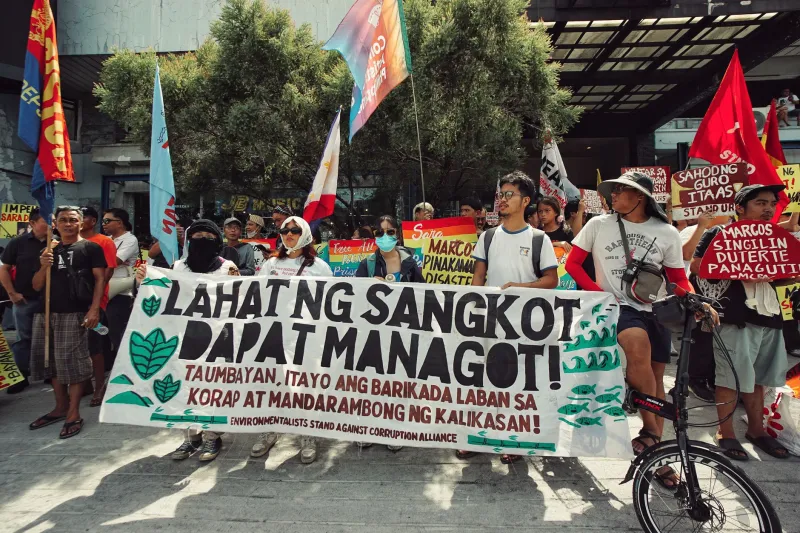
Gig workers have not accepted this arrangement passively. Across the country, a new generation of organizing campaigns is challenging platform power with creativity, persistence, and a clear-eyed understanding that traditional union structures must adapt to serve workers whose employment relationships the law does not yet recognize.
In New York City, the Independent Drivers Guild and subsequent campaigns by the New York Taxi Workers Alliance achieved a landmark minimum earnings standard for app-based drivers — the first of its kind in the United States. The campaign combined direct action, coalition-building with immigrant rights organizations, and sustained political pressure on the city council. It demonstrated that gig workers, despite their legal classification, can exercise collective power when organized.
In California, Proposition 22 — a 2020 ballot measure funded by Uber, Lyft, DoorDash, Instacart, and Postmates to the tune of over $200 million — represented the platforms' most aggressive effort to entrench contractor misclassification in state law. The measure passed, but it did not extinguish the organizing. Drivers and delivery workers continued to mobilize, and a California appeals court subsequently found Proposition 22 unconstitutional on procedural grounds — a ruling that remains under legal contest but signals the fragility of the industry's legislative victories.
Nationally, the PRO Act — the Protecting the Right to Organize Act — passed the House of Representatives in 2021 with provisions that would significantly curtail misclassification and extend collective bargaining rights to many gig workers. Its Senate passage remains blocked, but its introduction reflects a shifting political landscape in which the fiction of gig worker independence is increasingly difficult to sustain.
Worker centers, mutual aid networks, and digital-native organizing formations are filling the gaps that traditional labor law leaves open. Organizations like Gig Workers Collective and the Coalition of Immokalee Workers have demonstrated that sector-specific organizing, consumer pressure campaigns, and direct negotiation with corporate clients can win material improvements even outside formal collective bargaining frameworks.
Rewriting the Social Contract
The gig economy's rise poses a fundamental question: should the social protections that workers receive — health care, retirement security, unemployment insurance, protection from discrimination and unsafe conditions — be contingent on a particular employment classification that corporations can manipulate at will? The answer, if we take seriously the principle that human dignity is not conditional on legal technicality, is clearly no.
A reimagined social safety net for the twenty-first century would decouple worker protections from employment status, ensuring that anyone who performs labor for economic compensation retains basic rights regardless of how the contracting arrangement is labeled. Portable benefits systems, sectoral bargaining, and strengthened misclassification enforcement are among the policy mechanisms that advocates are advancing toward this end.
The gig economy promised a future of liberated, autonomous workers. What it delivered was a workforce stripped of the protections that previous generations organized and sacrificed to secure. Reclaiming those protections — and extending them to workers the old frameworks failed to cover — is not a nostalgic project. It is the unfinished work of justice.