The Second Sentence: Seven Court Fees That Keep Americans Paying Long After the Cell Door Closes
The Ledger Opens Where the Cell Door Closes
In an American courtroom, the sentence read from the bench is rarely the end of the matter. It is the first installment of a longer obligation. Judges in nearly every state are empowered to attach a schedule of legal financial obligations — court costs, surcharges, restitution, supervision fees, recoupment charges — to a case, and those obligations follow a person out of prison, across state lines, into credit reports, and often into a second round of incarceration for the crime of being poor.
Dr. Ambedkar's insistence that rights are worthless without the material capacity to exercise them applies with grim precision here. A right to liberty means little when a driver's license, a job, a lease, and a ballot can all be revoked by an unpaid balance of $2,400 in county fees. What follows is an accounting of seven such instruments, each examined for how it operates, who profits, and what organizers are doing about it.
1. Court Costs Levied at Sentencing
The most ordinary of the fees is also the most invisible. States assess "court costs" — clerk fees, prosecution fees, jail booking charges, and in some jurisdictions the salary of the prosecutor's own office — regardless of a defendant's income and often without a hearing on the ability to pay. A person sentenced to probation for a minor offense may leave the courthouse owing several hundred dollars before a single hour of supervision has begun.
Who profits: County general funds, clerks' offices, and in many states the offices of the very prosecutors who charged the case. When the courthouse is funded by the people it convicts, the incentive to convict does not need to be stated aloud.
What organizers are doing: The Fines and Fees Justice Center and allied groups have pushed for ability-to-pay hearings before assessment, waiver procedures written into statute, and the elimination of fees that fund prosecution offices. Cities such as those exposed in the Brookside, Alabama, ticketing scandal in 2022 have shown what happens when a municipality treats its police force as a revenue center; the reform response has been to separate court and police funding from enforcement revenue entirely.
2. Supervision Fees for Probation and Parole
In many states, the privilege of being supervised costs money. Probationers may pay a monthly fee, plus charges for drug testing, electronic monitoring, and mandatory programming. Failure to pay is itself a violation, meaning that a person can be jailed not for new criminal conduct but for an outstanding invoice.
Who profits: State corrections agencies and the private community corrections industry, which increasingly contracts supervision services.
What organizers are doing: Advocacy coalitions have won fee abolition in several states and have pushed courts to treat nonpayment as a civil matter rather than a revocation trigger. The core demand is a simple one: no one should be jailed because they could not buy their own freedom twice.
3. Daily Charges for Electronic Monitoring
Ankle monitors are marketed as a humane alternative to incarceration. They are frequently something else: a rental agreement. Participants are billed per day for the device, plus activation fees and, in some jurisdictions, the cost of the officer who monitors the data feed. A person on house arrest for six months may accrue thousands of dollars of debt while unable to work, and a technical alert — a dead battery, a missed signal — can return them to a cell.
Who profits: Private vendors that supply and service the devices under county contracts, often with revenue-sharing arrangements.
What organizers are doing: Community groups have demanded the release of contract terms and per-day rate schedules, arguing that any alternative to incarceration that carries a bill is simply incarceration sold in installments. Several jurisdictions have moved to absorb device costs into general budgets.
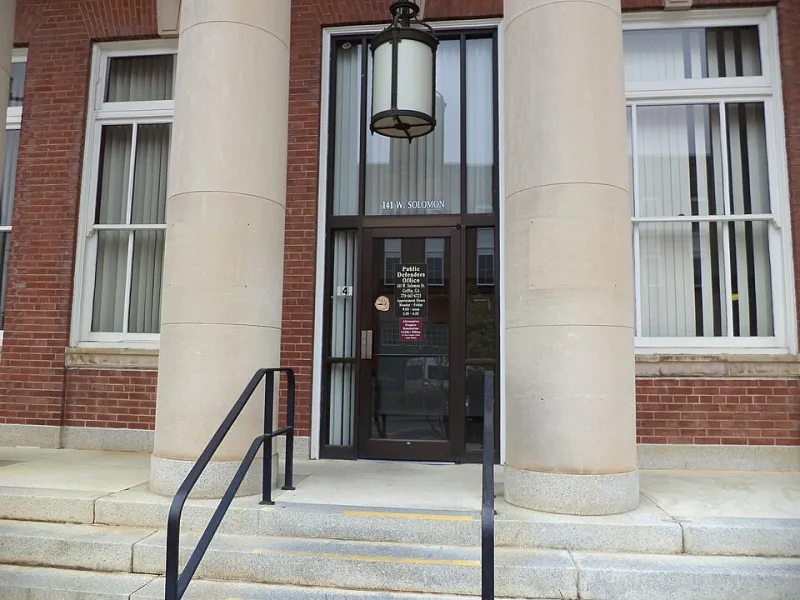
4. Recoupment for the Public Defender
A right that must be purchased is not a right. Yet many states bill defendants for the cost of appointed counsel, sometimes after the fact, sometimes through liens on property, sometimes through wage garnishment. The fees are typically trivial in recovery terms and devastating in symbolic terms: they tell a person that the Constitution's promise of counsel was a loan.
Who profits: State general funds and, in some counties, the public defender's own office budget — a structure that pits defenders' institutional survival against their clients' finances.
What organizers are doing: Defenders' associations and civil rights litigators have challenged recoupment statutes as unconstitutional conditions on the right to counsel, and legislative campaigns have pursued outright repeal.
5. The License Suspension Loop
Roughly a dozen states still suspend driver's licenses for unpaid court debt unrelated to driving. The consequences are circular by design: a person cannot pay the fee without driving to work, cannot drive legally without paying the fee, and may be jailed for driving on a suspended license.
Who profits: State motor vehicle agencies and courts that collect reinstatement fees — a second charge layered onto the first.
What organizers are doing: The national #EndTheSuspension campaign and state-level coalitions have won reinstatement programs and automatic restoration in several states, arguing that a license is economic infrastructure, not a collections lever.
6. Pay-to-Stay Jail Fees
A number of jurisdictions charge people for their own incarceration — a per-diem room-and-board rate billed to the person held in custody. The practice is documented across Michigan, California, and elsewhere, and it can attach to a person who was never convicted at all.
Who profits: County jails and their general funds.
What organizers are doing: Litigation and county-level budget campaigns have targeted these ordinances directly, with organizers pointing out that a jail fees the people it holds for the same reason a hotel bills its guests — except the guests cannot leave, and there is no lobby to complain in.
7. Collection Surcharges and the Private Collector's Cut
When a debt goes unpaid, courts may refer it to private collection agencies, which add surcharges and retain a percentage of what they recover. The practice converts the judiciary into a creditor and hands a private company a profit motive to pursue the poorest debtors most aggressively.
Who profits: Collection agencies and the courts that share in the recovered revenue.
What organizers are doing: Campaigns have demanded that courts stop referring legal debt to private collectors and have pushed for statutes of limitation on court debt, amnesty programs, and the elimination of interest and late fees on obligations the state itself created.
Abolition Is a Budget Line
Each of these seven instruments can be abolished or means-tested tomorrow with no loss to public safety. That is precisely why they persist: they are not about safety. They are about revenue, and about a political settlement that treats poor Americans as a dependable income stream. The task for 2026 is to make the ledger visible — county by county, fee schedule by fee schedule — and then to insist, in Dr. Ambedkar's terms, that a justice system which charges admission is not a justice system at all.